Saturday, 4 January 2014

Felice anno nuovo del Cavallo!


(per la versione in inglese clicca qui)

   Come tutti sappiamo, il 2014 è cominciato; ma secondo il calendario tradizionale cinese, che è un calendario lunare, il nuovo anno comincerà tra circa un mese: il 31 gennaio 2014.

"Calendario lunare": il primo carattere (yue) significa "luna", il secondo (li) significa "calendario".

Il nuovo anno sarà l'anno del Cavallo: "ma"

Chinese Idioms Special: Happy new year of the horse


   As we all know, the year 2014 has begun. But according to the Chinese traditional lunar calendar the new year is going to begin within almost a month (on the 31st of January 2014).

   The new Chinese Year is going

Wednesday, 2 October 2013

Chinese idioms 6: golden chickens

Ever heard of a chicken standing on one leg? Chinese language does in fact have an idiomatic saying that describes this situation:

金鸡独立 jīn jī dú lì [listen]: standing on one leg like a golden rooster.

    This expression deriving from

Monday, 16 September 2013

零壹 Voodo kungfu: 此岸 Temporal side - lyrics and translation

Maybe someone of you has already heard of the Chinese band "Vodoo Kungfu"? 


   They are also known as "Zero One", from their Chinese name 零壹  Líng yī (where "ling" means "zero" and "yi" means "one", written in

Saturday, 7 September 2013

Chinese idioms 5: imaginary fears

Hi everyone! Back from summer break, I am going to present some four-characters Chinese idioms  (chengyu) that express in a metaphorical way the concept of imaginary fear.

  The first one is 杯弓蛇影 bēi gōng shé yǐng.

    This chengyu refers to the episode of the Han Dynasty (30 - 220 AD) where the shape of a bow hung on the wall, which is reflected in a cup, is mistaken for

Tuesday, 6 August 2013

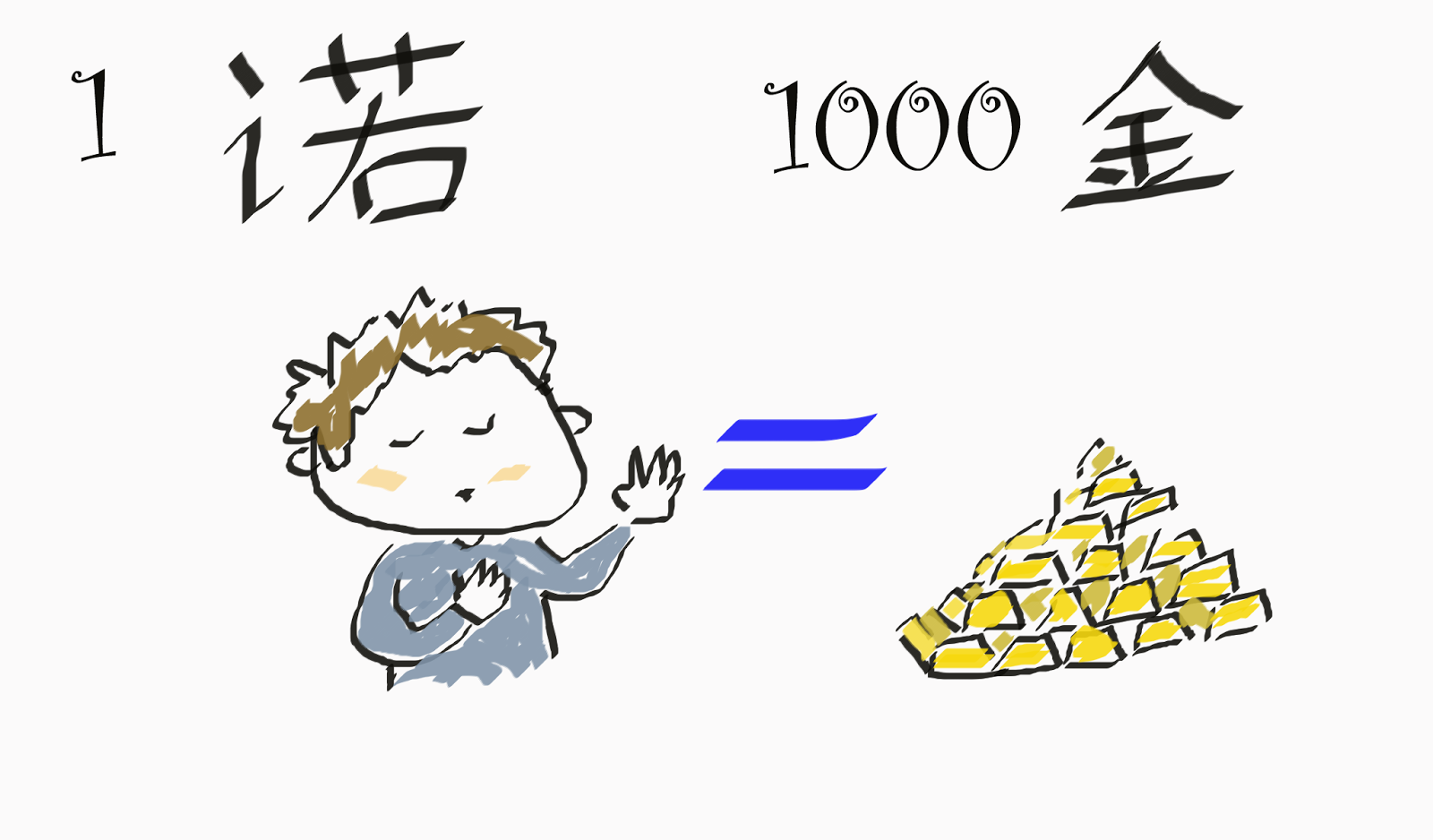
Chinese idioms 4 : 一诺千金


"A promise is worth a thousand ounces of gold", therefore "promise is debt". It is often used to describe a trustworthy person or behaviour. (ita: "Ogni promessa è debito")

   Looking at this four-character idiom more closely we could understand it as a a parallel between two units: "one promise" and "a thousand [pieces of] gold". It would be like "One promise [is] a thousand [pieces of] gold".


EXAMPLES:
  • 他一诺千金的作风赢得了大家的信任。
  • 她向来说话一诺千金


Friday, 2 August 2013

Verbs: what makes them so tough

Good day everyone! Today's post will be a very general and introductive one. If you already have some experience with Chinese language, this post might be useless. 请你谅解!


[    for Italian text, go to the end of the post    ]

   As you start studying Chinese, you could be pleasantly surprised to find out that you will not need to learn by heart tons of conjugations, varying according to person (well, for English speaking people this is a given), number, aspect and tense. Yes indeed: Chinese verbs have no conjugations at all.

For example, let's take the verb "to know" 知道 zhidao: the verb never changes. What changes is the pronoun: